
Getting Kids Involved in the Kitchen: From Babies to Preschoolers
I LOVE getting my kids involved in the kitchen with me. From the time they were infants, I preferred to have them right there next to me as I cooked dinner or cleaned up. As they got older, I loved finding different ways for them to help me.
I always want joining me in the kitchen to be an open-invitation. And I want them- from the time they’re infants- to feel welcome and included. Some of my favorite memories of my own childhood were in the kitchen with my grandma and mom. I want my girls to have the same warm memories.
But sometimes it can feel like more trouble than it’s worth to have kids join you in the kitchen. And sometimes it can feel easier just to send them along to play. I get it. But the trick is finding age appropriate ways for them to help you. This way, they’re included and learning and you’re still getting dinner on the table.
So from a mom of two little girls who LOVE joining me in all things kitchen related, here’s some tips (organized by age) on how to include little ones while cooking along with the benefits we’ve found so far:
Affiliate disclosure: As an Amazon Associate I earn from qualifying purchases.
The Benefits of Getting Kids Involved in the Kitchen
The time that we spend in the kitchen together is so valuable. It’s such a natural place to talk, bond, and have some great quality time. Also, it’s a great chance to learn responsibility and contribute to the family as a whole.
I want to encourage my children to develop a lifelong love for cooking and help them develop a positive attitude towards nutritious food. Having my kids involved in the kitchen with me feels like the most natural way to do that.
Lastly, the kitchen is such an authentic place to learn real-life skills. Measuring, counting, chemistry, vocabulary, practical life skills- the kitchen is a great classroom.
Kids also benefit so much from the sensory experience. The smells, textures, and tastes all combine to make such a rich sensory experience for them. Additionally, being able to do basic skills in the kitchen can really boost their feeling of self-efficacy and independence.
Because I want them to have a strong positive association with cooking, I want to keep the atmosphere positive, fun, and relaxed. To make that happen with little kids, I need to select activities they can help with that are age appropriate:
Including Younger Babies in the Kitchen(0-6 Months):
There’s more to this than just convenience. Obviously you need to keep babies this young nearby. But given that research suggests that babies are being primed for language acquisition while still in the womb, I’m certainly not going to discount what they’re capable of learning as young infants.
The kitchen is the heart of our home. Being with us while we’re cooking and the whole family is congregating is a great chance for them to simply hear language being spoken and to learn the voices of all their family members.
Try a Wrap or a Bouncy Seat
I’ve seen lovely videos of babies snuggled up in wraps sleeping while their parent cooks. My sister said that a wrap was the only way she got her daughter to take that last “pre-dinner” nap.
However, I’ve never been able to figure out a wrap. It requires some sort of magic that I just don’t have. Aso, my kids have never slept when there’s things going on around them (even from week 1), so we put our children in a little reclining bouncy seat in the kitchen to keep them with us. Clearly make sure that it’s safe and tucked out of the way, but this was a great way to have them with us while we were in the kitchen.
Talk to Them- A Lot
Because we only did this during their wake windows, I would be sure to talk to them as much as possible while cooking or cleaning. Did I feel crazy holding up a spoon as I unloaded the dishwasher and saying “This is a spoon!”? You bet. Did my baby grin at me though? Yep.
And did it help with bonding AND language acquisition? There’s no way of knowing. BUT my now-preschooler and I are bonded at the hip AND she hasn’t stopped talking for a single second since she was 18 months old. It certainly didn’t hurt.
Involving Older Babies in the Kitchen (6-12 mONTHS):

Here’s where the fun really starts. Once your baby is sitting up independently, they’re ready to really start exploring their surroundings. This is when we turned our kitchen into time for them to play right alongside of us.
Playing with Everyday Objects
Babies love everyday objects, so I would be sure to hand my children simple kitchen items to play with while they were with me.
A silicon spoon, a whisk, and an old empty coffee can were some favorites.
Nesting prep bowls that they could stack, flip over, and move around also kept them occupied and engaged. A salad spinner is super fun once babies realize all they have to do is push the top of it.
And at my grandma’s house- their favorite thing to play with was a giant bag of tupperware containers.
They would play and explore and I would cook. And the whole time- I would talk to them and they would babble right on back.
Including Toddlers in the Kitchen
So your sweet, sitting baby who was content to play with spoons has now turned into a full on walking/toddling explorer who wants to get into EVERYTHING. How do you include a toddler in the kitchen?
The answer? Embrace their energy and their curiosity and channel it into something productive.

Toddlers LOVE transferring- have them transfer prepared veggies onto a baking sheet!
Younger Toddlers:
Transferring and Pouring With Solids
At this age, young toddlers LOVE to pour and transfer. You’ll see them do it intrinsically- just diligently transferring items from one bin to another or trying to scoop up materials.
So give them a sense of purpose with all of this pouring and transferring!
At this age, my daughter would move vegetables that I chopped into a meal prep container.
She loved hanging out with me while I meal prepped and assisting with moving the food to where it needed to be. (This was also a great chance to really start teaching the importance of keeping your hands clean while handling food!)
For an added challenge I would give her scoops or utensils to transfer the ingredients with.
She also loved taking the food out of the meal prep containers and placing it on a prepared baking sheet for roasting.
They also love to POUR at this age. Start off with solids. You can prepare small bowls of seasonings or other ingredients for them to pour into a larger bowl.
If you Can, Get a Kitchen Tower (Kitchen Helper)
The biggest thing that helped us at this age and right on through the preschool years was a kitchen helper (also called a kitchen tower). It’s a great place to park them to keep them safe and out of the way of any oven door openings, boiling water, etc.
I also never felt comfortable just placing them on the counter. My kids were way too curious to just stay put and I had visions of them crawling their way right off of that counter or right onto my cutting board or right into my knife drawer…. You get the idea.
So we got a kitchen helper and I debated it for MONTHS because it felt like such a splurge. But this is HANDS DOWN one of the best things we’ve added to our home. We’ve used it every day since we got it and it’s made so many things more possible for us.
If you’re wanting to learn more about kitchen towers, or you’re on the fence about investing one, you can check out my honest ode to my kitchen tower here: “Is a Montessori Kitchen Helper Worth It?”
I really do love mine- not only because it is so useful everyday, but it is also so sturdy and keeps my children safe. The one we purchased is available on Amazon here: https://amzn.to/41nhooE
Older Toddlers:

While they still will love everything that they did as younger toddlers, at this age you can also increase the complexity of the tasks you give them.
POuring, Mixing, and Meal Prepping
They still love to pour, but add in liquids as they develop better hand-eye coordination.
At this age they’re capable of mixing ingredients with a spoon. And you know what- they LOVE it. (Tip: If you’re worried about splatter, put the ingredients in an oversized bowl and give them a smaller spoon.)
Toddlers at this age are capable of beginning to plan ahead. Ask them what you need to do next to prepare a particular meal and let them start thinking through that.
Additionally, they can start to use toddler safe utensils to prepare food. A great tool that my daughter loves to use is a crinkle cutter- she uses it to cut bananas and other soft fruits and vegetables into strips. A crinkle cutter is a great chance to practice that hand-eye coordination without having to worry about them slicing off a finger. (We got our crinkle cutter on Amazon for about five bucks and we use it almost everyday: https://amzn.to/41nhooE
Getting Preschoolers Involved in the Kitchen

Preschoolers are capable of so much more than they’re often given credit for. This is also a golden window for helping them develop some independence and lifelong habits. Involving preschoolers in the kitchen window is a great chance to help them really feel like they’re contributing to the family.
Preschoolers also like to have some say in their meals- it gives them a sense of control in one area of their life. This can often manifest itself in the form of picky eating- but what if you took that desire for control and flipped it on its head by getting them increasingly involved in the kitchen?
Deciding on Meals and Helping Meal Plan
Try letting them pick a dinner once a week. Clearly give them parameters and start off small. Give them two or three options to pick from. And then- have them help you make it as much as they can. They’ll feel proud that this was “their” dinner that they selected and helped with.
As they get more comfortable with this, and if you’re comfortable with this, let them join you as you meal plan. Oftentimes my daughter will sit with me when I’m meal planning for the week and when I can’t just think of anything- she often has a really good idea. I’m often surprised at what she does think of off the top of her head- often requesting meals like stir fry or salad- ones she really enjoys helping me with.
It’s good for them to start to see at this age all of the different factors that go into a good meal plan: the variety, the balance, the produce that needs to get used, accounting for the week’s time commitments, etc.
Picking Out New Recipes to Try
Preschoolers like learning ALONGSIDE you. So when looking for new recipes, include your preschooler! We’ll often sit down together and flip through a cookbook. I let her put sticky notes on new meals she’d like to try and make with me and we talk through everything. The ingredients, how to make it, etc.
She likes seeing all the different options and having some say in what we’re cooking.

Following a Recipe
This is a great age to really work on multi-step instructions. Toddlers tend to stay in the bounds of two-step commands, but preschoolers can really handle a lot more. (The ability to follow multi-step instructions is also a skill that their teachers will be so grateful for- BELIEVE ME.)
Recipes are a great way to do this. Read it out loud to them. Ask them to anticipate what they think might be next. Ask them towards the end if they think anything has been left out. Let them really see the process from beginning to end.
For very simple recipes, you could also make a visual version of the recipe for them. Have images for each ingredient and have illustrations for the steps. See if they can follow along with the pictures. (This would be a great idea for something like a salad. Have everything pre-chopped and let them mix it all together in the order of the pictures.)
Baking and Decorating
Preschoolers love making treats and baking is something that is just inherently exciting for them. They’re also at the age where they can actually do a lot of it. They’re capable of mixing, pouring, and counting out measurements.
It’s a great chance to work on skills like counting and introduce ideas like measurements and chemical changes.
They also love decorating. Let them try frosting things or adding sprinkles. Or if you’re giving your baked goods away, let them package them up with cute ribbons or a note. (This is also a great way to include acts of service for your preschooler.)


Setting the Table and Cleaning Up
Preschoolers are also capable of handling some very simple responsibilities. For meal times, my daughter helps with setting utensils, placemats, and napkins on the table.
She also carries her used dishes and utensils back to the kitchen. It’s something so basic, but it goes such a long way. She’s filled with the pride of GENUINELY helping and she’s developing a sense of responsibility.
Preparing and Making Basic Meals
Preschoolers can absolutely prepare basic ingredients with kid-safe utensils. My preschooler still uses the crinkle cutter that we introduced to her as a toddler to prep some of her fruits and veggies.
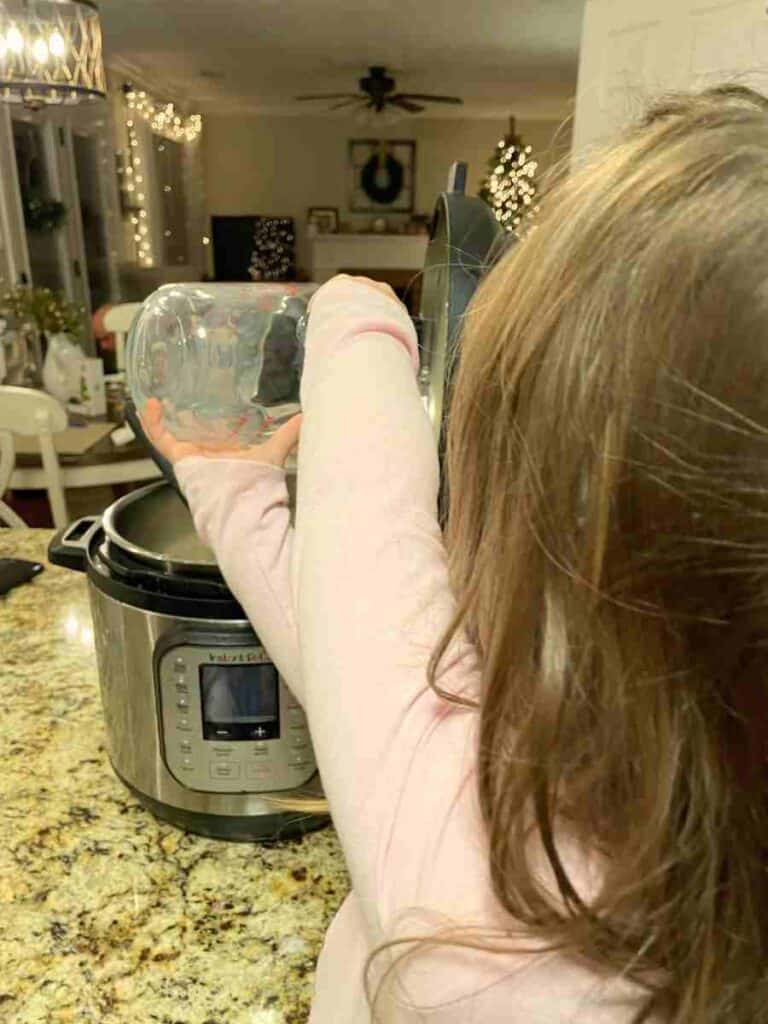
She also helps with things like spinning the lettuce in a salad spinner and adding ingredients to a crockpot or an instant pot.
Additionally, at this age we started helping her make her own peanut butter and banana sandwiches.
Closing Thoughts
Having my children in the kitchen with me is one of my favorite ways to spend time with them. I love seeing them grow in their skills and develop a sense of self-efficacy and responsibility, but most importantly, I love that quality time with them.
Involving them in the kitchen-and helping them be active participants- has been such a worthwhile endeavor.
And if you’re debating purchasing a Montessori kitchen helper, don’t forget to check out my honest review of ours here: “Is a Montessori Kitchen Helper Worth It?”




4 Comments